
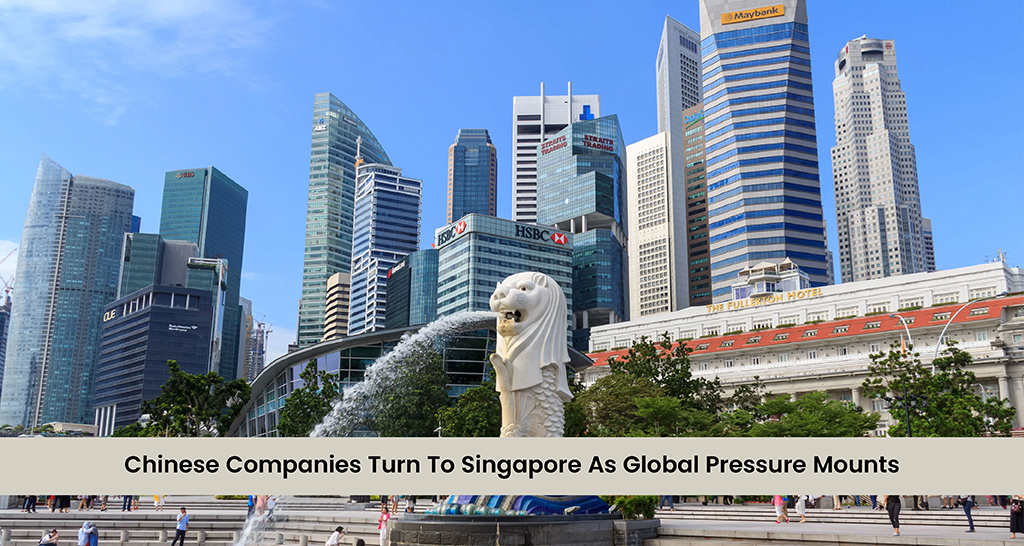
As geopolitical tensions rise and the scrutiny of Chinese businesses increases globally, more Chinese companies are looking to Singapore as their go-to base for international operations. This trend underscores the growing difficulties that China-linked firms are encountering in Western markets and showcases Singapore’s attractiveness as a stable, neutral, and business-friendly environment.
In recent years, we have seen a surge of Chinese companies setting up regional headquarters or holding companies in Singapore, particularly in sectors like technology, artificial intelligence, biotechnology, data centers, and advanced manufacturing. Business advisers have noted that the number of inquiries from Chinese entrepreneurs looking to incorporate or move their operations has picked up speed, especially as scrutiny from the United States and Europe intensifies.
Singapore boasts a range of strategic benefits. With its solid rule of law, political stability, and a wide array of free trade agreements, it stands out as a prime gateway to global markets. For businesses looking to connect with international investors, customers, and talent, this city-state offers a reliable environment with fewer geopolitical challenges compared to directly operating from China.
For a lot of companies, this shift is about how they are perceived. Executives believe that being based in Singapore can help break down barriers when it comes to working with international partners or securing funding overseas, especially in industries that are sensitive to national security issues. Nowadays, some businesses even refer to themselves as Singapore-based, even if they still have significant operations or founders in China.
Companies that focus on technology and innovation are leading the charge in this transition. Startups diving into artificial intelligence, semiconductors, and data infrastructure view Singapore as a prime location to expand their global reach while keeping strong ties to Asian supply chains. Additionally, some have relocated their intellectual property ownership or sales operations overseas to Singapore, aiming to protect their core businesses from any potential trade restrictions.
The trend does have its drawbacks, though. Analysts warn that moving to Singapore does not automatically shield companies from regulatory scrutiny. Big or well-known firms with strong ties to China still find themselves under the microscope in Western markets, no matter where they are officially based. Governments are increasingly digging deeper than just corporate addresses to evaluate ownership structures, management control, and data flows.
Singapore is navigating its own set of challenges as it tries to strike a balance between being open and maintaining oversight. In recent years, authorities have ramped up regulations to safeguard the nation’s standing as a clean and transparent financial hub. This has led to more rigorous checks on corporate structures, financial transactions, and technology exports, particularly in areas tied to sensitive technologies.
Even with its limitations, the city-state continues to be a magnet for smaller and mid-sized Chinese companies looking for flexibility and a global presence. For these businesses, Singapore presents a practical option: it is close to China, shares cultural ties, and provides access to the rapidly growing economies of Southeast Asia, all while offering a legal and regulatory framework that global investors can trust.
As we look to the future, analysts predict that Singapore will continue to strengthen its position as a hub for businesses linked to China, even as the world keeps a closer eye on these connections. This trend highlights how corporate strategies are increasingly influenced by geopolitics, with companies adjusting their structures and locations to successfully navigate a changing global environment.

Discussion about this post